Crate Train a Puppy in 7 Simple Steps: A Stress-Free Plan That Actually Works
Quick answer: To crate train a puppy, choose a crate just big enough to stand and turn around, make it cozy, and feed meals and treats inside. Start with the door open, then close it for a few seconds, then minutes. Never use the crate as punishment, and keep daytime crate time to roughly the puppy’s age in months plus one, in hours.
Night one with a new puppy usually goes something like this: you set up a cozy crate, close the door, turn off the light… and the crying starts. By 2 a.m. you’re on the floor next to the crate, wondering if this whole idea was a mistake.
It wasn’t. When you crate train a puppy the right way, the crate turns into their favorite den: a safe spot to nap, a big help with potty training, and a way to keep them out of trouble when you can’t watch them. The trick is going slowly and keeping every crate experience positive. Here’s the plan we’d give a friend.
Why Crate Train a Puppy at All?
Plenty of people feel a little guilty the first time they crate train a puppy. That’s understandable. But dogs are den animals by nature, and many grow to love a small, quiet space that’s theirs. Used kindly, a crate helps with:
- Potty training. Most puppies avoid soiling the place they sleep, so the crate helps them learn bladder control.
- Safety. Puppies chew cords, socks, plants and anything else at mouth height. A crate keeps them safe when you’re not watching.
- Travel and vet visits. A crate-trained dog handles car rides, boarding and vet stays with far less stress.
- Calm downtime. Puppies need a lot of sleep, often 18 hours or more a day, and many don’t settle on their own without a quiet spot.
What a crate is not: a punishment, or a place to keep a dog for most of the day. More on that below.
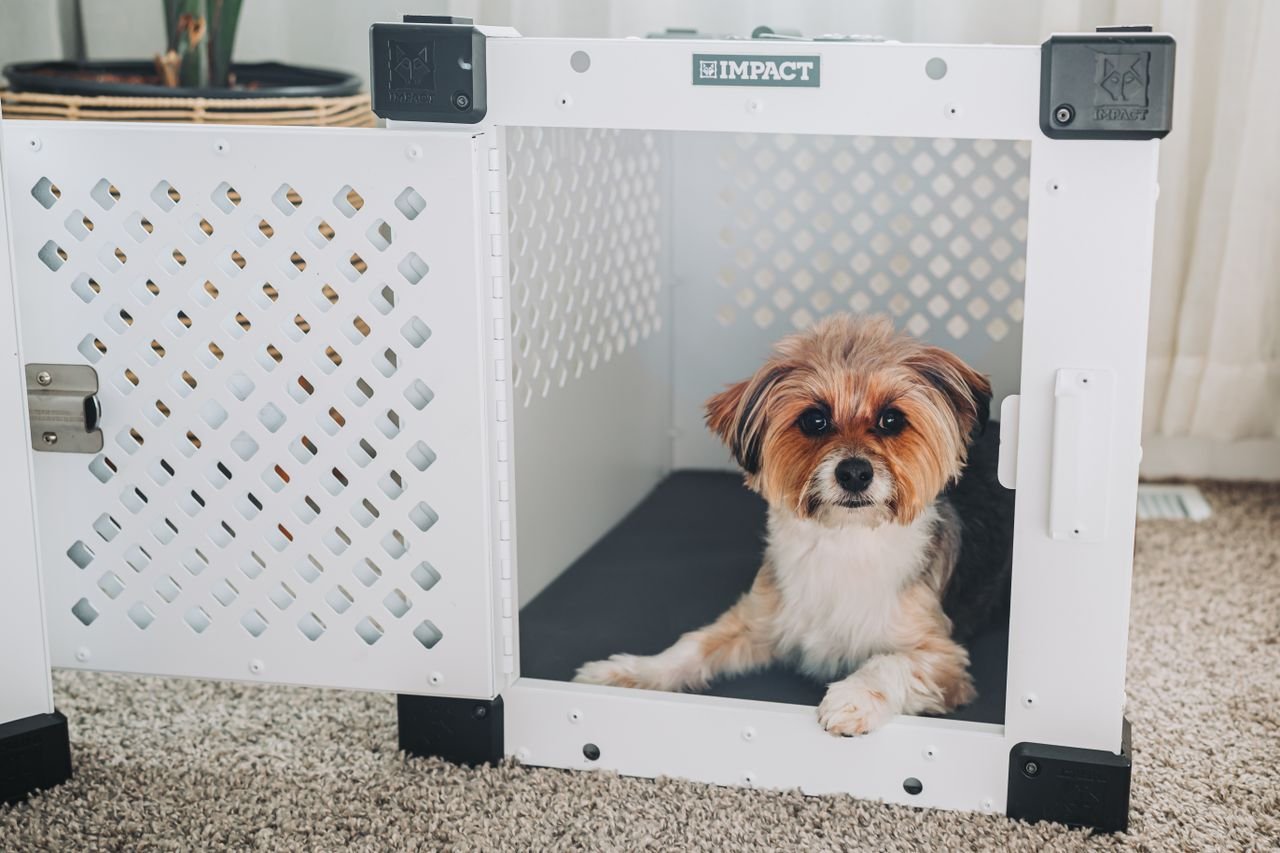
Before You Start: Pick the Right Crate
You can’t crate train a puppy well in the wrong crate. Size matters most. Your puppy should be able to stand up, turn around and lie down stretched out. Much bigger than that, and they may pee in one corner and sleep in the other.
If you’ve got a breed that’ll grow a lot, buy a crate sized for their adult body and use a divider panel to shrink the space now. Move the divider as they grow.
Common types:
- Wire crates: good airflow, easy to see out of, usually fold flat and come with dividers. Many puppies like a blanket draped over three sides to make it more den-like.
- Plastic crates: cozier and more enclosed, and often approved for air travel.
- Soft-sided crates: light and portable, but not ideal for puppies who chew or scratch.
Where to Put the Crate While You Crate Train a Puppy
Put it where life happens, at least during the day. A corner of the living room or kitchen works well. Puppies are social, and being shut away in a quiet back room feels like being left out.
For the first few weeks, many trainers suggest keeping the crate in or near your bedroom at night. Your puppy hears you breathing, feels less alone, and you’ll hear them if they need a potty break. You can move it later.
Step 1: Make the Crate a Great Place to Be
On the first day you crate train a puppy, start with the door open. Add a soft bed or blanket (one that can be washed easily), and toss a few tasty treats inside. Let your puppy wander in and out on their own. No pushing, no closing the door.
Every time they step in, something good happens: a treat, a toy, a calm “good dog.” You’re building a simple idea in their head. Crate equals good stuff.
Step 2: Feed Meals in the Crate
Meals are one of the easiest ways to crate train a puppy. Put the food bowl just inside the door at first. Over a few meals, move it further back so your puppy steps fully inside to eat.
Once they’re eating comfortably inside, close the door while they eat, then open it as soon as they finish. Over the next few days, leave it closed a few extra minutes after the meal. If they whine, you’ve moved too fast; go back to a shorter time next meal.
Step 3: Teach a Crate Cue
Pick a word like “crate,” “bed” or “house.” Say it, toss a treat into the crate, and praise when your puppy goes in. After a few days, say the cue and wait a second before tossing the treat, so they start going in on the word.
Keep sessions short and upbeat. You’ll crate train a puppy faster with five fun minutes than with thirty boring ones. If you’re already working on basic manners, our list of healthy dog treats for training has small, low-calorie rewards that work perfectly here.
Step 4: Build Up Short Closed-Door Sessions
Now the real practice begins. Ask your puppy into the crate, give a long-lasting chew or a stuffed food toy, close the door and sit nearby for a few minutes. Then let them out calmly, before they start fussing.
Slowly stretch the time: 5 minutes, 10, 20, 30. Start walking around the room. Then leave the room for a minute and come back. The goal is a puppy who thinks “the door closed and nothing bad happened.”
A key rule when you crate train a puppy: open the door when they’re quiet, not while they’re crying (unless you think they need the bathroom). Otherwise, they learn that crying opens doors.
Step 5: Practice Short Departures
Once your puppy can relax for 30 minutes with you in the room, start leaving the house for short trips: getting the mail, a walk around the block. Keep arrivals and departures boring. Big emotional goodbyes can make puppies more anxious, not less.
Vary your routine so picking up your keys doesn’t always mean “crate time.” Sometimes you crate them and stay home; sometimes you leave them loose in a puppy-proofed area while you’re there.
Step 6: Crate Train a Puppy at Night
Nights are the tough part for most families. A few things help:
- Take your puppy out for a potty break right before bed.
- Skip big play sessions late in the evening. Calm is better.
- Keep the crate close to your bed for the first weeks.
- Give something safe to snuggle, like a soft toy or a blanket that smells like you or their littermates.
- Expect a middle-of-the-night potty trip for young puppies.
When they wake and whine at night, take them out on leash, keep it quiet and boring, let them go, praise, and put them straight back in the crate. No play, no lights on. Night-time trips are business only. Our puppy potty training guide covers night routines in more detail.
Step 7: Keep It Positive for Life
Even after your dog is fully trained, keep the crate a happy spot. Leave the door open sometimes so they can nap there by choice. Hide a treat inside now and then. Never use it to punish. A dog that’s sent to the crate after being scolded learns to dread it, and you lose one of your best tools.
A 2-Week Starter Plan to Crate Train a Puppy
If you like having a plan on the fridge, here’s a rough two-week outline. Some puppies zip through it; others need twice as long. Both are normal. Move on only when your puppy is relaxed at the current step.
- Days 1–2: Door open, treats tossed inside, meals near the doorway. No closing yet. You’re just making the crate interesting.
- Days 3–4: Meals fully inside the crate. Close the door during the meal and open it as soon as the bowl is empty.
- Days 5–6: Add your cue word. Practice 5–10 minute closed-door sessions with a chew while you sit nearby.
- Days 7–8: Stretch sessions to 20–30 minutes. Walk around the room, step out for a minute, come back calmly.
- Days 9–11: Leave the house for 10–15 minutes at a time. Keep hellos and goodbyes low-key.
- Days 12–14: Build toward an hour or so, within your puppy’s bladder limits. Keep using the crate for naps during the day so it doesn’t only mean “you’re leaving.”
The biggest mistake when people crate train a puppy on a schedule is sticking to the calendar instead of the dog. If day 8 feels like a step too far, repeat day 6 for a while. Slow progress still counts as progress, and it’s far easier than undoing a fear of the crate later.
One more tip: keep a simple log for the first couple of weeks. Jot down potty times, naps and how long your puppy settled in the crate. After a few days you’ll spot patterns, like the 4 p.m. zoomies or the reliable after-breakfast nap, and you can plan crate time around them instead of fighting them.
How Long Can a Puppy Stay in a Crate?
This is the question everyone asks when they start to crate train a puppy, and it matters a lot. A common rule of thumb is that puppies can hold their bladder for about one hour per month of age, plus one, during the day. So a three-month-old might manage roughly three to four hours, though every puppy is different.
| Puppy age | Rough daytime limit |
|---|---|
| 8–10 weeks | 30–60 minutes awake, longer while napping |
| 11–14 weeks | 1–3 hours |
| 15–16 weeks | 3–4 hours |
| 17+ weeks | 4 hours or so |
Even adult dogs shouldn’t spend most of the day in a crate. If you work long hours, plan for a midday walk, a dog walker, a trusted neighbor or doggy daycare. A crate is for rest and safety, not all-day storage.
Sample Daily Schedule to Crate Train a Puppy
Here’s how a day might look while you crate train a puppy that’s 10 to 12 weeks old. Adjust to your life and your pup.
- 6:30 a.m. Out of crate, straight outside to potty.
- 6:45 Breakfast (in the crate), then potty again.
- 7:00–8:00 Play, short training, then a nap in the crate.
- 10:00 Potty, play, explore.
- 11:00 Crate nap.
- 12:30 p.m. Lunch, potty, short walk or yard time.
- 1:30 Crate nap.
- 3:30 Potty, play, a little socialization.
- 5:30 Dinner, potty.
- 6:00–8:30 Family time, gentle play, short crate rest.
- 10:00 Last potty, bedtime in the crate.
- Middle of the night One quiet potty trip if needed.
Notice how much napping is in there. Overtired puppies bite more, cry more and have more accidents. The crate helps them actually rest.
Crying in the Crate: What to Do
Some whining is normal at the beginning. Here’s how to tell what’s going on:
- Needs to potty? If it’s been a while, take them out on leash, then straight back in.
- Bored or overexcited? Try a chew toy or a stuffed food toy, and make sure they got enough exercise and play earlier.
- Testing you? If you’ve just taken them out and they’re fed and tired, wait for a few seconds of quiet before you open the door.
- Panicking? Drooling, frantic scratching, trying to break out, or bending bars are signs of real distress. Stop, go back several steps, and talk to your vet or a qualified trainer.
Ongoing panic when left alone can be separation anxiety rather than a crate problem. Our guide on dog separation anxiety explains the signs and how to help.
Common Mistakes When You Crate Train a Puppy
- Going too fast. Shutting the door for hours on day one is the quickest way to create a crate-hater.
- Using the crate as punishment. It should never be the “bad dog” zone.
- A crate that’s too big. More room often means more accidents.
- Leaving collars or tags on. They can catch on wire. Many trainers suggest taking collars off in the crate.
- Too many hours inside. Puppies need exercise, play and company.
- Letting them out every time they cry. Check for real needs, then wait for calm.
- Skipping exercise. A puppy with zero outlet for energy won’t settle anywhere.
What to Put in the Crate (and What to Leave Out)
Good options:
- A washable bed or blanket (if your puppy shreds it, switch to a firm mat for a while)
- Safe chew toys sized for your puppy
- A food-stuffed toy for longer sessions
- A water bowl that clips to the side for longer stays, once they’re potty trained
Leave out: anything they can tear and swallow, rawhide pieces small enough to choke on, and toys with squeakers they can rip out. If you’re unsure what’s safe to chew, ask your vet.
How Long Does It Take to Crate Train a Puppy?
Honest answer: it depends. Some puppies settle within a week or two. Others take a couple of months to be truly comfortable alone in the crate. Age, personality, past experiences and how consistent the household is all play a part.
Don’t measure success by speed. Measure it by how relaxed your puppy looks when they walk in. A puppy who naps in the crate with the door open is a puppy who gets it.
How to Crate Train a Puppy in Real-Life Situations
Most plans assume a perfect, quiet house. Real life is messier. Here’s how to adjust.
How to crate train a puppy when you work full time
Use weekends and evenings for practice, and arrange a midday visit from a walker, neighbor or family member. Young puppies simply can’t hold it for a full workday. A puppy-proofed pen with the crate door open inside can be a good middle step for longer days.
How to crate train a puppy in an apartment
Neighbors hear everything, so lean on chews and food toys to keep crate time quiet, and choose a spot away from shared walls. White noise can soften hallway sounds that set puppies off.
How to crate train a puppy when you already have a dog
Give the puppy its own crate, even if your older dog uses one too. Feed them separately, and let the older dog have puppy-free breaks. The crate gives both of them a rest.
Can you crate train a puppy at 8 weeks?
Yes. Eight weeks is a common age to start, as long as sessions are very short and potty breaks are frequent. Young puppies sleep a lot, which actually makes early crate naps easier.
Should you crate train a puppy with a playpen too?
Many families use both. The pen gives room to play when you can’t supervise closely; the crate is for naps, nights and car rides. Place the open crate inside the pen and your puppy can choose.
How to crate train a puppy who cries the moment the door closes
Go back a step. Close the door for one or two seconds while they lick a treat, then open it. Build up in tiny chunks. If crying turns into panic, talk to your vet or a qualified trainer.
Crate Training and the Rest of Puppyhood
It’s easiest to crate train a puppy as part of a bigger first-year plan: vet visits and vaccines, gentle socialization, basic manners and lots of play. If you’re just getting started, our guide on how to take care of a puppy pulls it all together, and our article on how to socialize a puppy covers the critical early weeks.
For a vet-backed overview, the Humane Society’s crate training guide is another good resource.
Quick Answers
Should I cover the crate?
Many puppies like a light blanket over the top and three sides. It makes the space feel like a den and cuts down on visual distractions. Leave the front open for airflow, and remove it if your puppy pulls it in and chews it.
Is it OK to crate train a puppy if I work from home?
Yes, and it’s actually easier. You can do lots of short practice sessions throughout the day. Just make sure to practice leaving the house too, so your puppy learns to be alone.
Can I crate train an older dog?
Usually, yes. Adult dogs may take longer, especially if they’ve had bad crate experiences, but the same slow, positive steps work.
Should the crate door ever stay open?
Absolutely. Once your puppy is reliable, an open-door crate becomes a cozy retreat they choose on their own.
One Last Thing Before You Crate Train a Puppy
Everyone who has tried to crate train a puppy has had rough nights. You’re not doing it wrong because yours cried at 3 a.m. Keep it slow, keep it kind, reward calm behavior, and give the crate time to become home. In a few weeks you’ll likely find your puppy curled up inside with the door wide open, and you’ll both sleep a lot better.